
When most people think of police helicopters in the UK, they picture high-speed motorway pursuits and airborne support for traffic policing. In Czechia, however, the reality is markedly different. Based in two original Second World War hangars on the oldest part of Prague – Václav Havel Ruzyne Airport, the Letecká služba Policie České republiky operates Bell 412s and Eurocopter EC-135s across a remarkably broad range of missions, many of which extend far beyond the stereotypical image of police aviation.
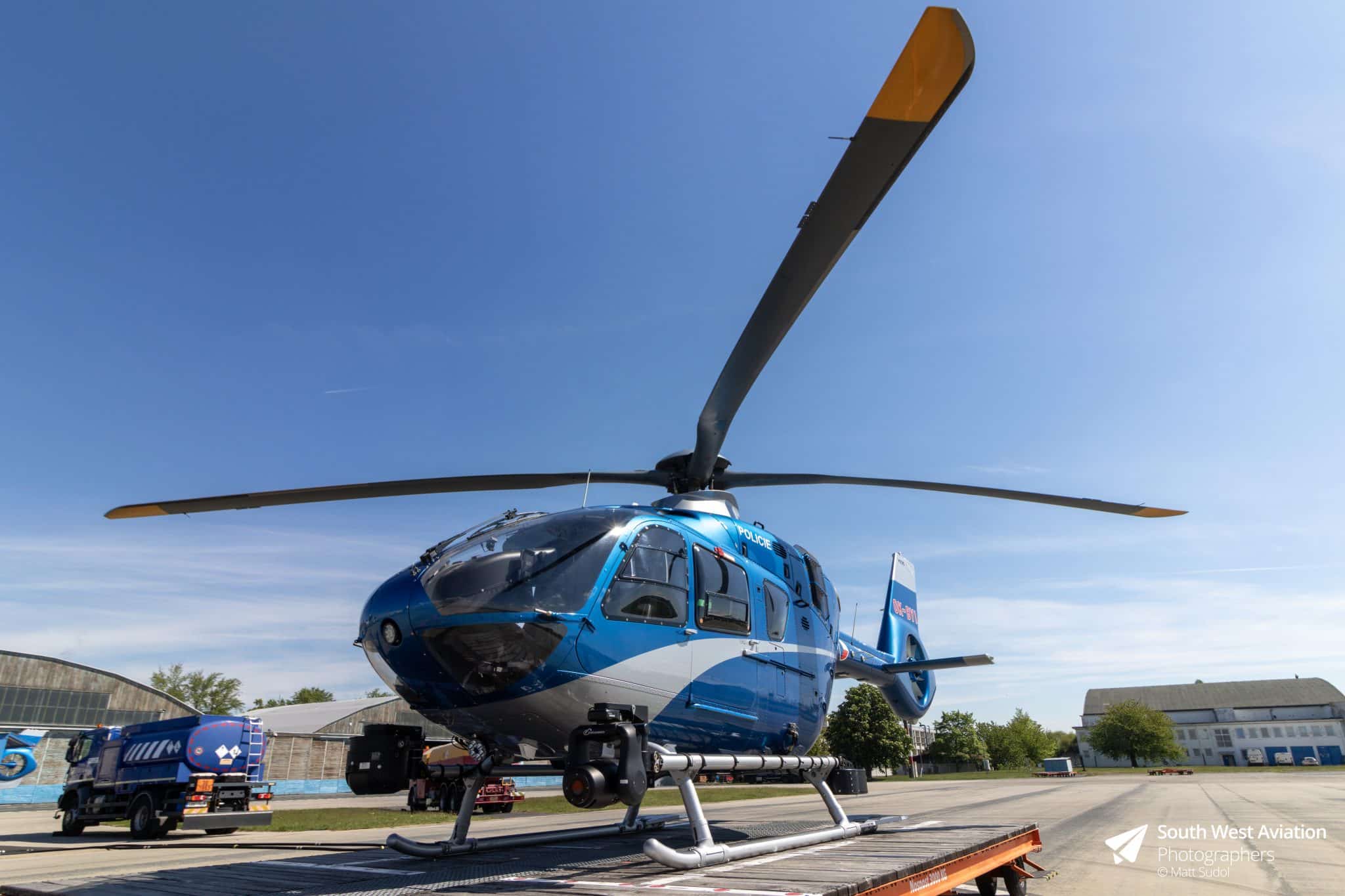
The Letecká služba Policie České republiky traces its roots to the četnické letecké hlídky formed in 1935, the first organized police aviation element in the Czech lands. Although disbanded in 1939, police aviation was revived after the Second World War and went through several restructurings within the state security apparatus. Over the latter half of the 20th century, it evolved from fixed-wing patrol operations into a modern helicopter-based force supporting border security, search and rescue, and government transport. Following the dissolution of Czechoslovakia, the Czech Republic retained the federal aviation unit, and in 1994 it was formally reorganized as the Letecká služba Policie České republiky, continuing a long tradition of aerial policing and emergency support.
The Bell 412, six examples of which are operated by the unit, is not a type commonly associated with police aviation in Europe. In Czech service, however, it has been employed since 1993 across a varied mission set that includes search and rescue, aerial firefighting, and troop transport. A proven twin-engine medium-lift utility helicopter, the Bell 412 is valued for its reliability, strong performance, and ability to operate in demanding environments. Developed from the Bell 212 and first flown in 1979, it introduced the now-familiar four-blade composite rotor system, which improved lift, reduced vibration, and enhanced handling. Its spacious cabin, capable of carrying up to 13 passengers or a wide range of mission equipment, has made it a natural fit for search and rescue, offshore transport, firefighting, law enforcement, and military utility roles. That flexibility explains why it remains such an important part of the Czech police fleet.
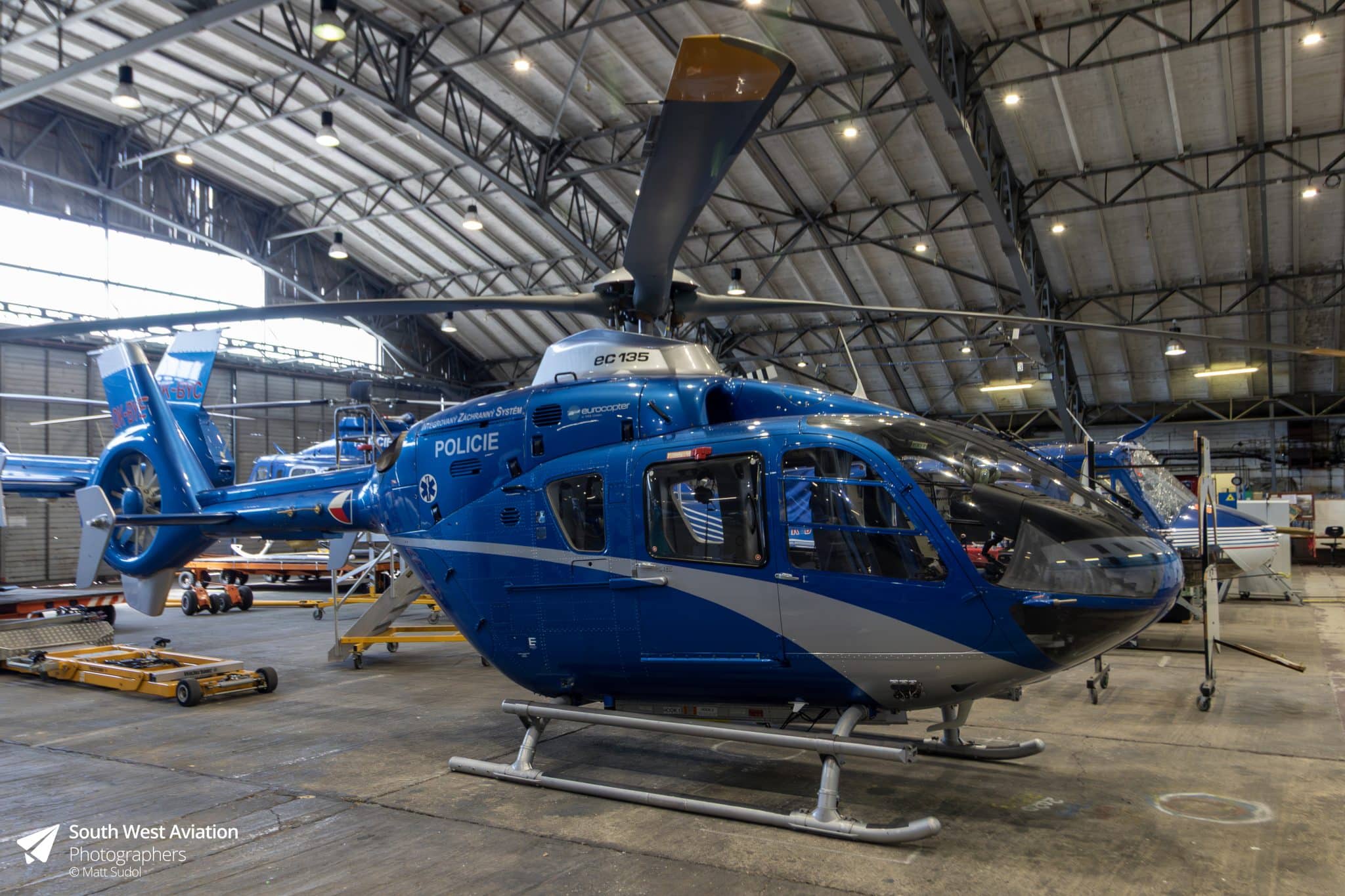
The unit’s nine Eurocopter EC-135-family helicopters carry out aerial surveillance, helicopter emergency medical service (HEMS) missions, and occasional VIP transport. The first Eurocopter EC-135 entered service with the Letecká služba Policie České republiky in 2003, beginning a major modernization of the fleet. The Eurocopter EC-135 is a highly versatile twin-engine light utility helicopter widely used in air ambulance, law enforcement, corporate transport, and military training roles. First flown in 1994 and entering service in 1996, it evolved from the MBB Bo 108 technology demonstrator and introduced advanced features such as full-authority digital engine control, digital automatic flight control, and the distinctive Fenestron shrouded tail rotor, which significantly reduces noise. With a spacious modular cabin and low-vibration rotor system, the Eurocopter EC-135 has proved especially well suited to emergency medical and other public-service operations.
A normal shift sees two duty crews on standby: one dedicated to helicopter emergency medical service and another for police operations. One of the more unusual aspects, at least from a UK perspective, is that the police crew may have access to both an Eurocopter EC-135 and a Bell 412, selecting the most suitable aircraft for the tasking at hand. The HEMS crew typically consists of two pilots, one doctor, and one paramedic. For police operations, the standard crew is two pilots and one tactical observer, while Bell 412 search-and-rescue sorties can also include two rescue technicians from the Prague Fire Service.
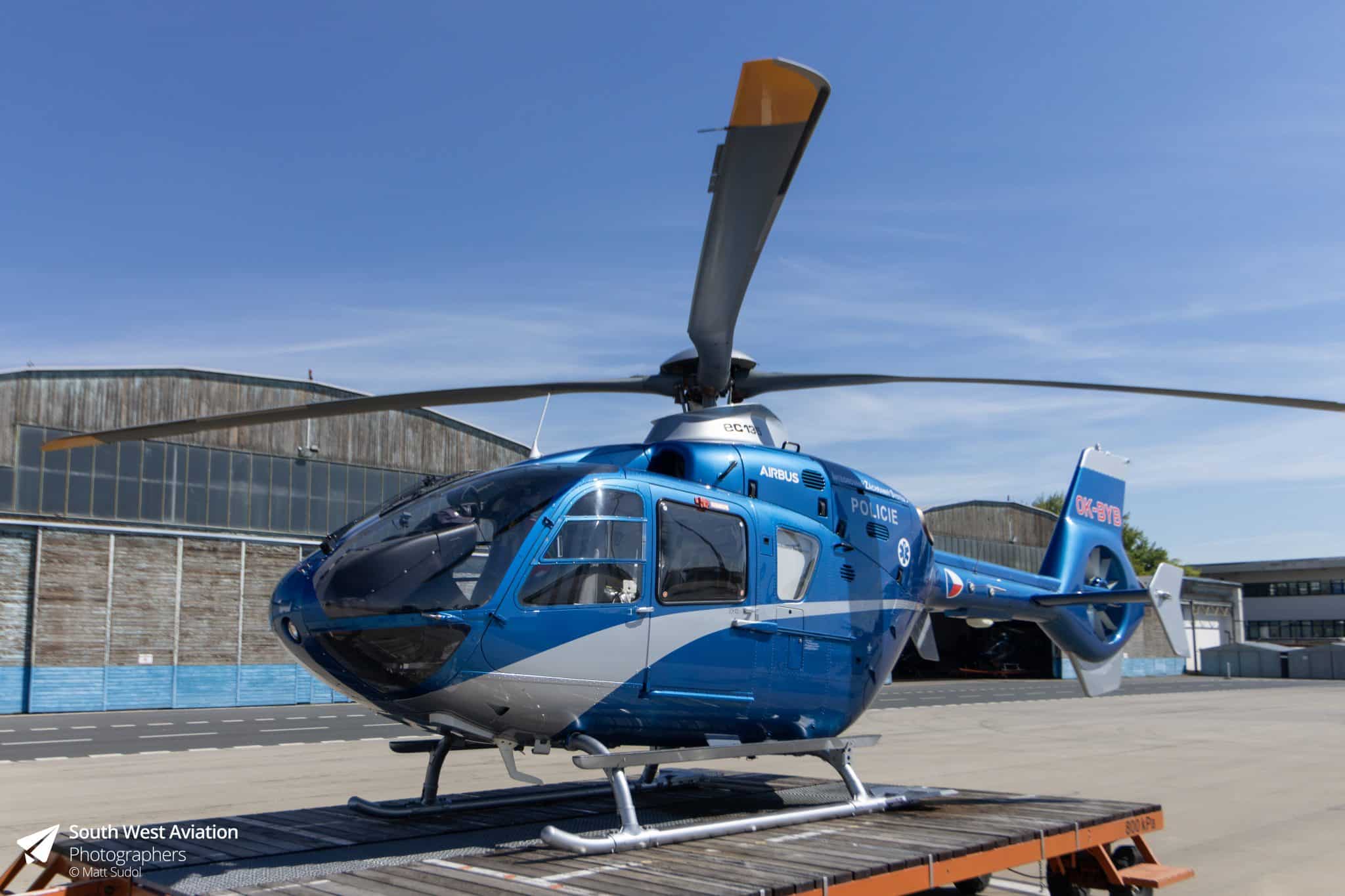
The helicopter emergency medical service crew has its own purpose-built headquarters on the edge of the aviation unit’s apron, with dedicated crew rest areas, a briefing room, medical preparation spaces, and administrative offices. From here, the Eurocopter EC-135 is tasked directly by the Prague Emergency Medical Service dispatch center, which coordinates HEMS missions across the capital and the surrounding region. Although based at Prague – Václav Havel Ruzyne Airport, the aircraft’s operational footprint extends across the whole of Central Bohemia, a region covering 11,014.97 km² and representing almost 14% of the Czech Republic. This broad area of responsibility demands rapid launch capability, efficient routing, and close coordination with ground ambulance teams, as missions can range from dense urban districts to remote rural communities, major road corridors, and forested terrain. The combination of a modern airframe, a well-equipped base, and a highly trained crew allows the unit to deliver advanced pre-hospital care across one of Czechia’s most operationally diverse regions.
The most recent addition to the Eurocopter EC-135 fleet is OK-BYI, an Airbus H135 built in 2019 and equipped with Helionix, the fully integrated avionics suite designed to reduce pilot workload and improve situational awareness. With its modern glass cockpit, intuitive human-machine interface, synthetic vision, four-axis autopilot, and automated safety functions, Helionix allows crews to concentrate more fully on the mission itself. The aircraft is also fitted with a Wescam MX turret for electro-optical and infrared high-definition imaging, with the capability to downlink live imagery to the dispatch center at Prague – Václav Havel Ruzyne Airport and to police headquarters in Prague. A TrakkaBeam high-intensity gyro-stabilized searchlight further enhances night and complex-mission capability. Taken together, this equipment helps explain why the Airbus H135 has become such a popular law-enforcement helicopter across Europe.
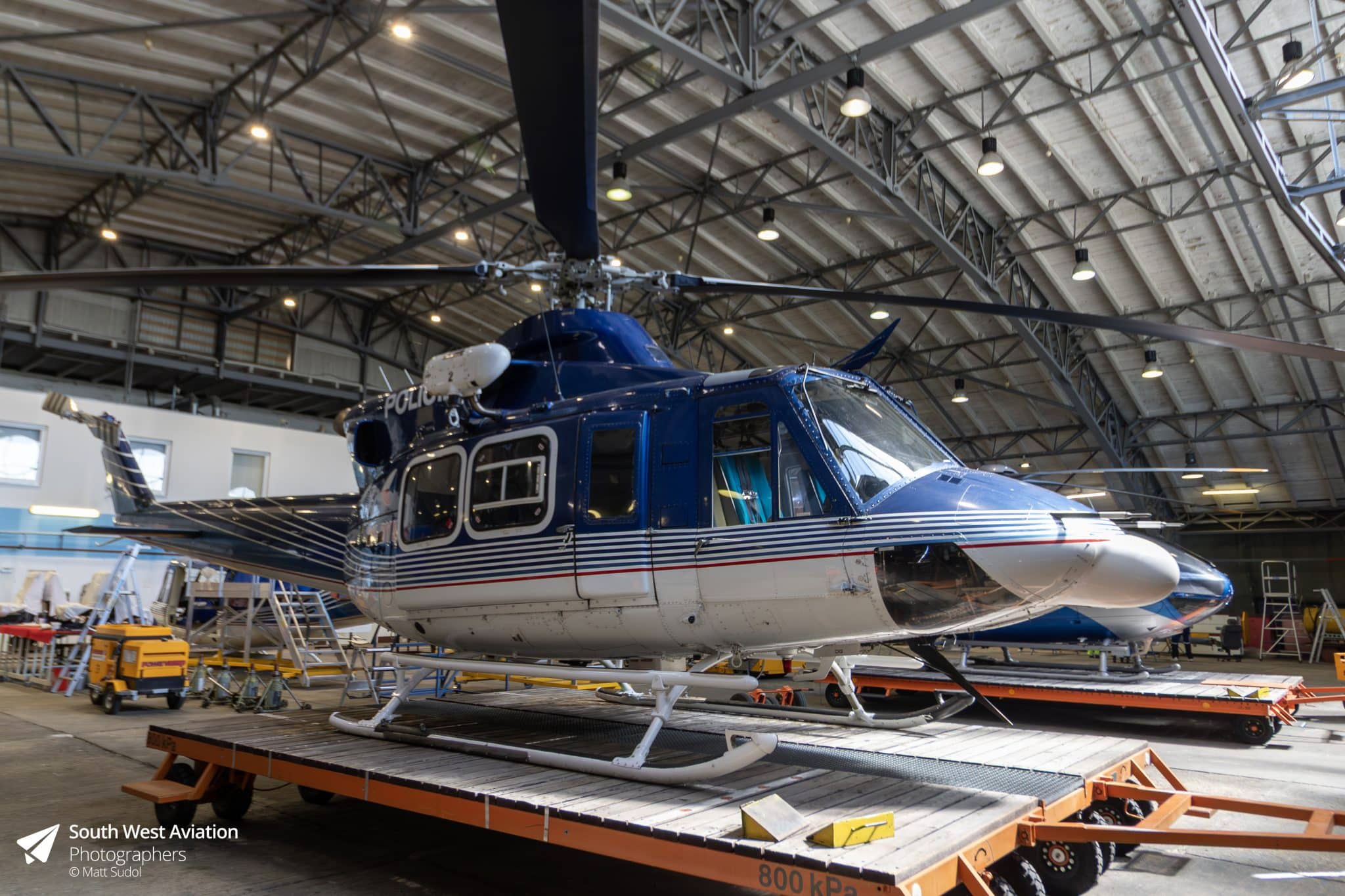
While the Eurocopter EC-135 fleet undertakes most surveillance and observation tasking, the Bell 412 operates in a far more utilitarian role. It can deploy six members of the Útvar rychlého nasazení, the Czech police special weapons and tactics unit, by a variety of methods, including fast roping. The aircraft can also embark two members of the Prague Fire Service trained as technical rescue specialists, who support search-and-rescue operations using the cabin-mounted winch. Just days before our visit, a pair of Bell 412s had been deployed to Rynartice and Jetřichovice to assist with a large forest fire in Bohemian Switzerland National Park, using Bambi Buckets to deliver water onto the fire. It was a clear reminder that, in Czechia, police aviation often extends well beyond conventional law-enforcement duties.
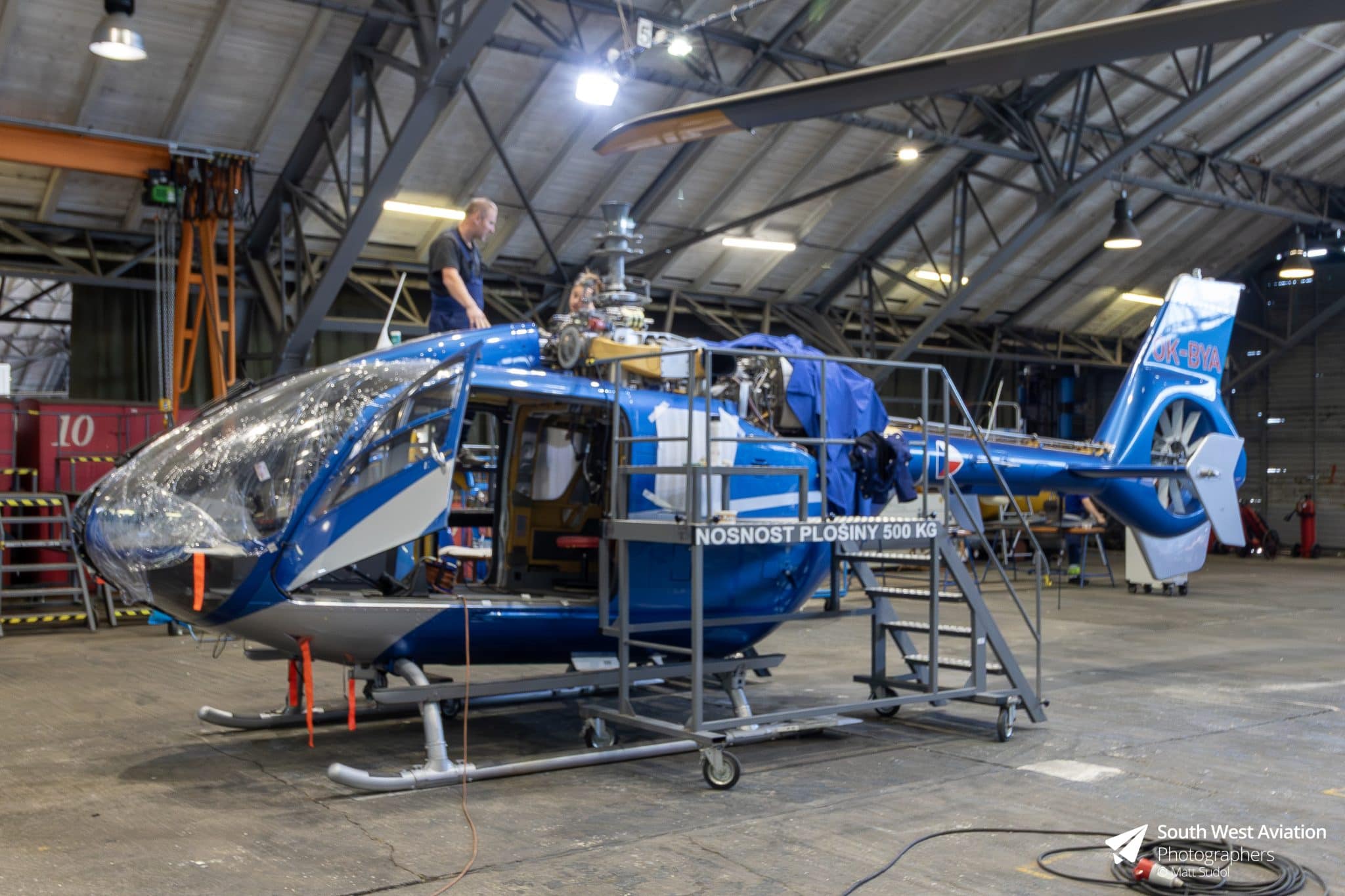
Depth maintenance for both the Bell 412 and Eurocopter EC-135 fleets is carried out in-house at Prague – Václav Havel Ruzyne Airport by a dedicated engineering team. Walking through the hangar, it is possible to see the full spectrum of preventative and corrective maintenance, from routine component changes to major airframe work with transmissions removed and replaced. Engineers responsible for depth maintenance work a standard Monday-to-Friday schedule, while those assigned to line maintenance mirror the shift pattern of the aircrew. Daily line maintenance keeps the aircraft safe and mission ready through inspections, fluid checks, and systems testing, ensuring that every sortie launches with confidence in the aircraft’s airworthiness. The unit can also deploy to temporary operating bases anywhere in Czechia using mobile fuel bowsers and dedicated support drivers, reducing reliance on established airports and increasing time on task.
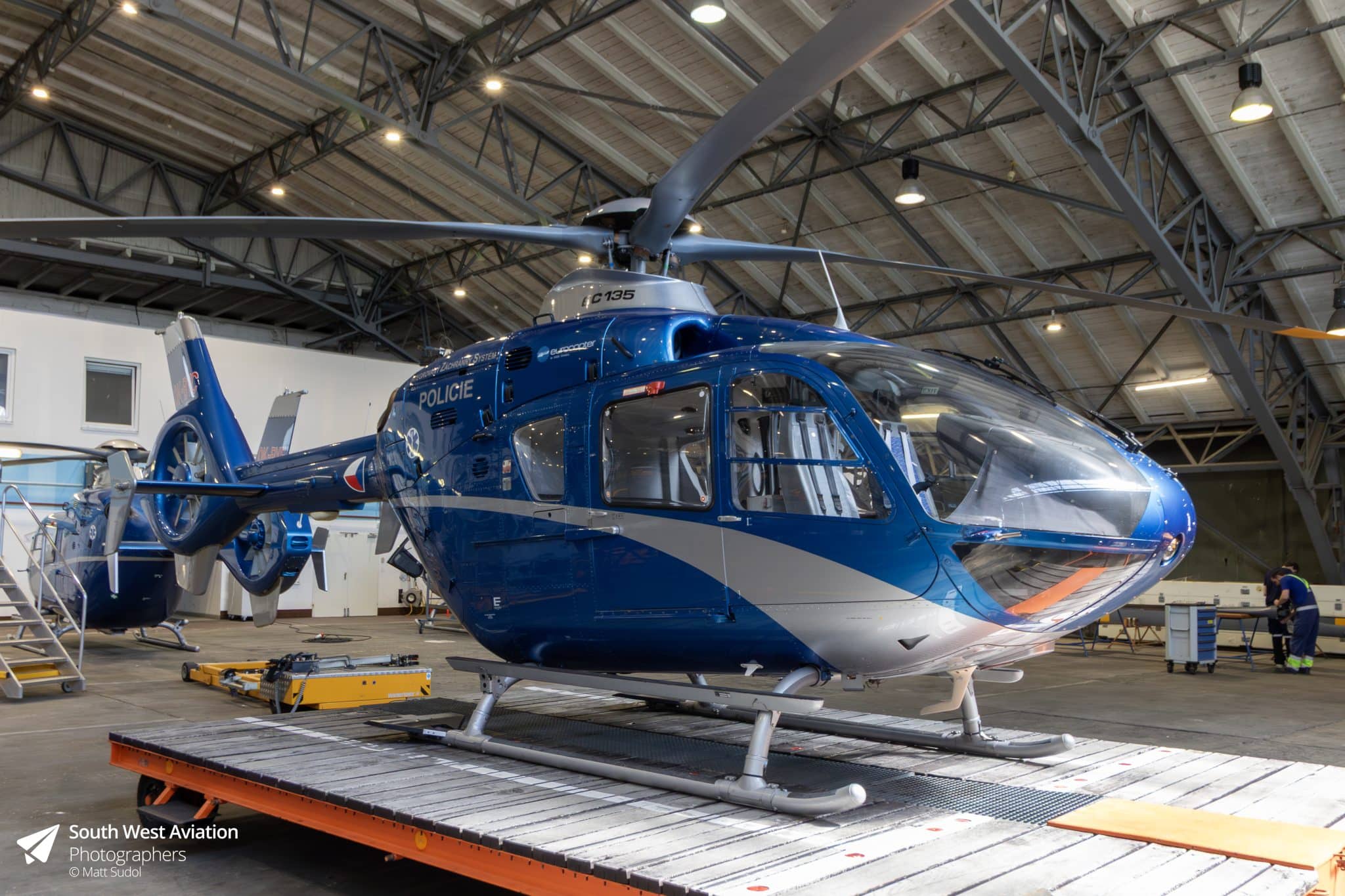
In one corner of the hangar sits a fully EASA-certified Airbus H145 Flight and Navigation Procedures Trainer / Multi-Crew Cooperation simulator supplied by Entrol. Although its presence now appears neatly aligned with the Czech police’s subsequent decision to replace their Eurocopter EC-135 fleet with 11 Airbus H145s, atg the time of the simulator acquisition was not made with that outcome in mind. At the time, the Airbus H145s were procured through an open public tender involving multiple manufacturers, and the police did not know which company would ultimately win the future helicopter contract. The Airbus H145 brings a five-blade rotor, Helionix avionics, and strong single-engine performance, making it one of Europe’s most capable multi-role police helicopters. Alongside this fleet renewal, the future of Czech aerial emergency response will also include two Sikorsky S-70 Firehawk helicopters based on the PZL Mielec S-70i Black Hawk, acquired with support from the European Commission’s rescEU programme. These aircraft will strengthen the country’s aerial firefighting capability while also being available for wider European deployment when required.
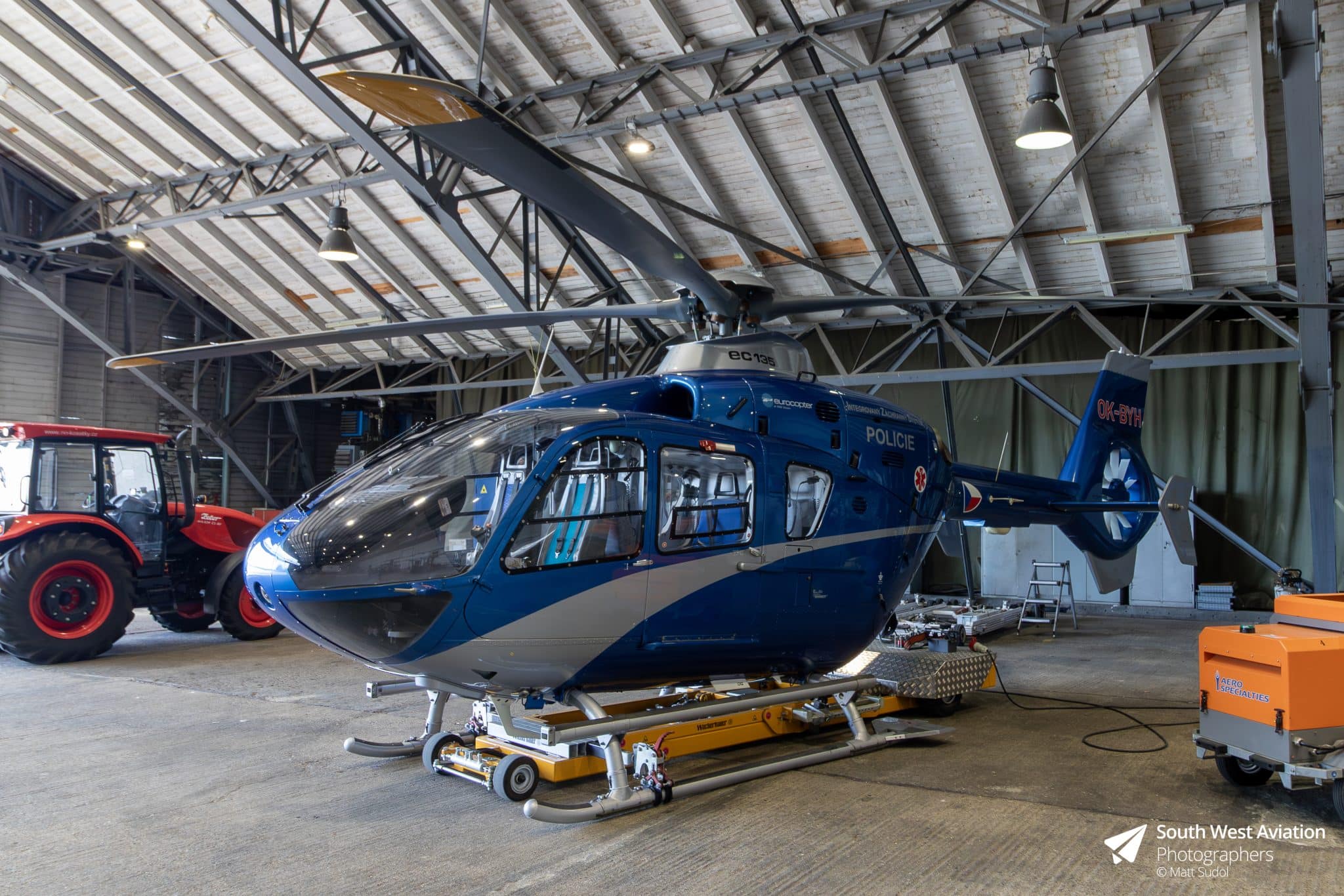
What stands out most about the Letecká služba Policie České republiky is not simply the variety of aircraft it operates, but the breadth of missions it carries out with them. From medical response and tactical policing to rescue work, firefighting, and future fleet modernization, the unit represents aform of police aviation that is far more versatile than many outsiders might expect. In Prague, the police helicopter is not merely an airborne observer; it is an essential multi-role tool at the center of public safety.
South West Aviation Photographers would like to thank everyone at Letecká služba Policie České republiky for making this article possible
Article by Matt Sudol
© South West Aviation Photographers 2026