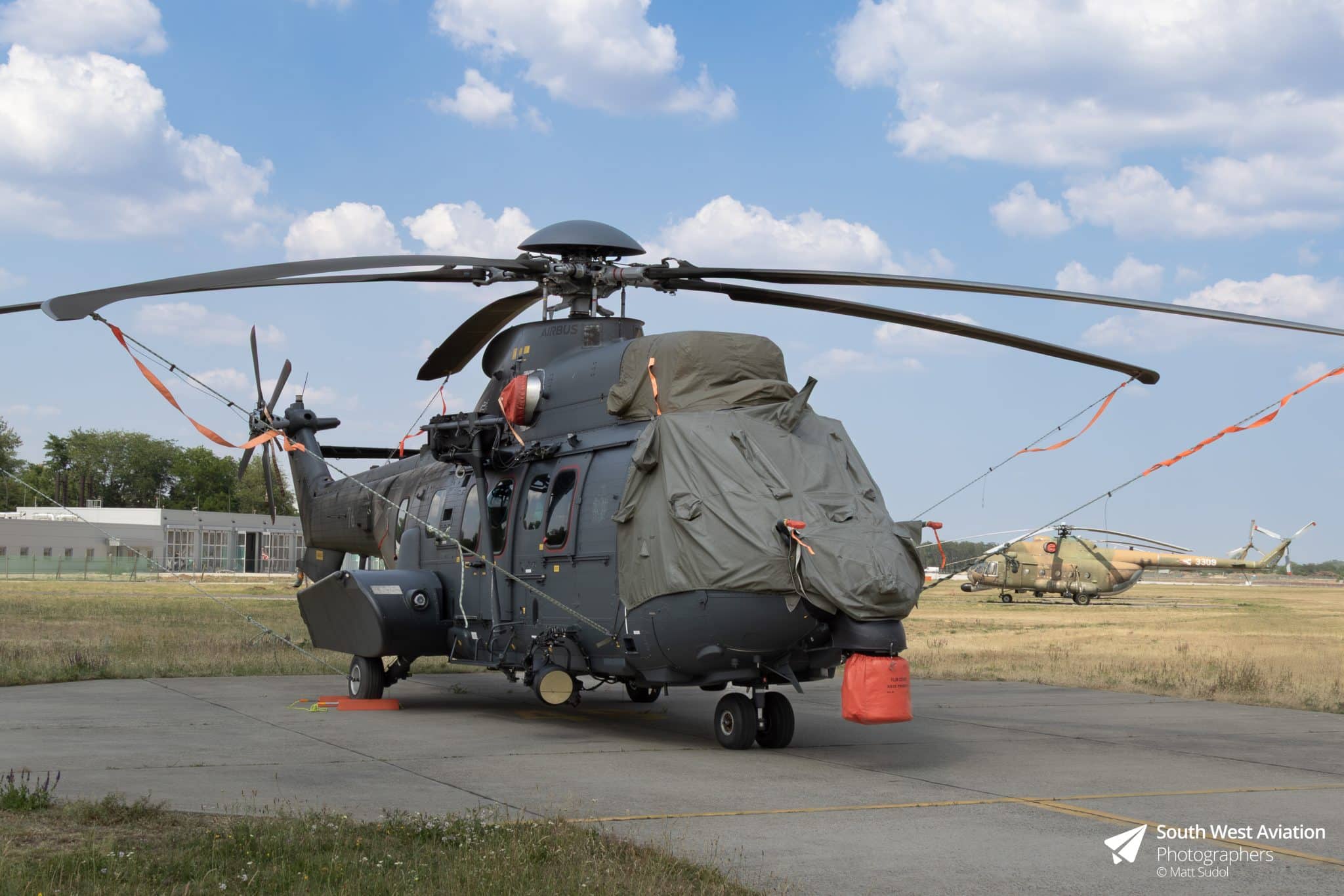
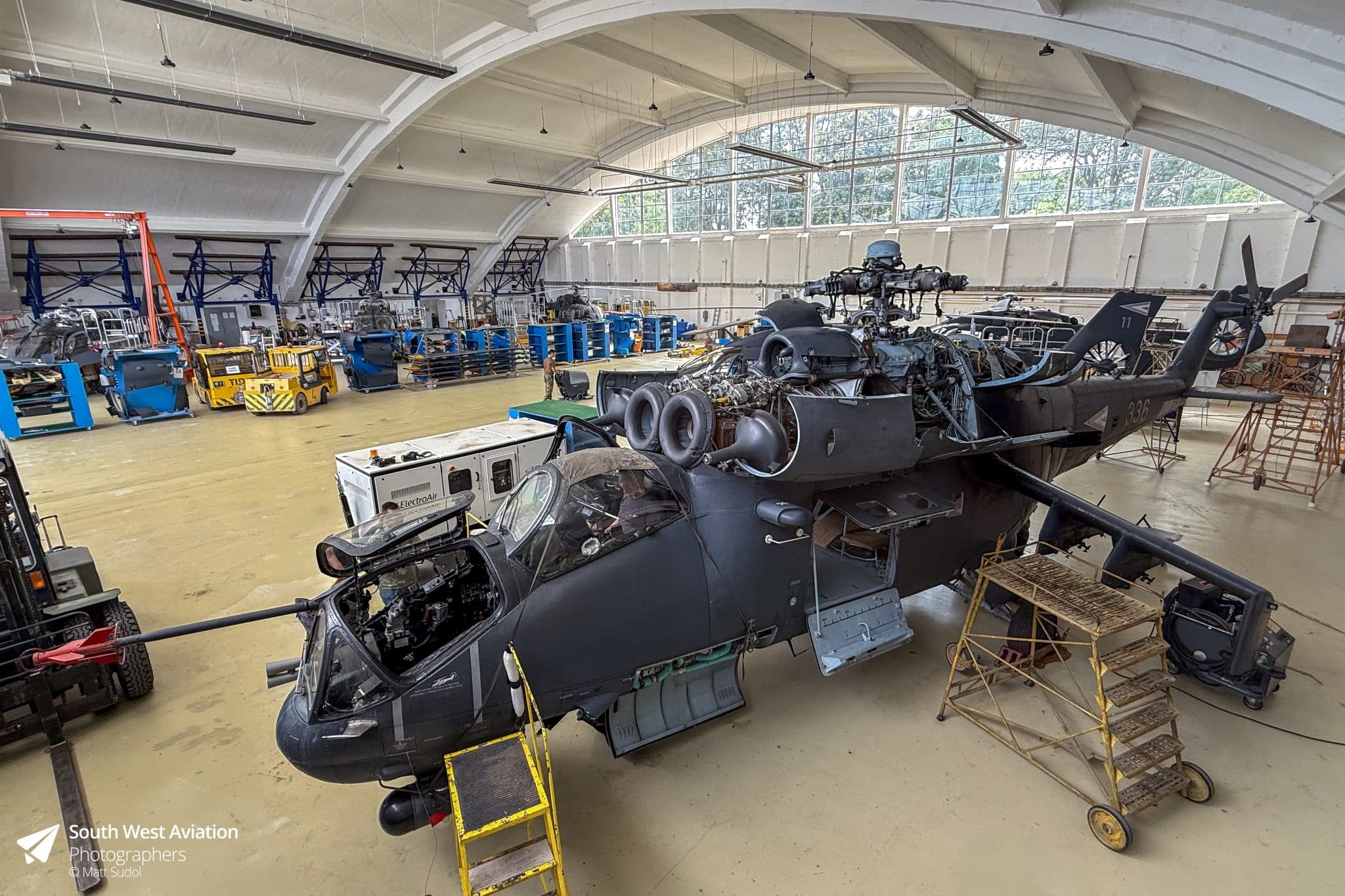
As part of the National Defense and Military Development Program, Hungary and the Hungarian Air Force has invested in strengthening, as well as modernizing, its capabilities, including the introduction of new transport aircraft in the form of Embraer KC-390s, upgrading and purchasing the previously leased SAAB Gripen JAS-39C/Ds and replacing its aging fleet of Soviet helicopters with a state of the art fleet from Airbus. It was to Hungarian Defence Forces 86th Helicopter Wing that Matt Sudol travelled to find out more.

Founded on the 15th August 1918 the Hungarian Air Force was initially formed to conduct flight training utilizing aircraft that survived World War One. Due to the 1920 Treaty of Trianon, Hungary was forbidden from operating military aircraft, however under the guise of a civilian flying club an air arm was formed. By the start of World War Two the Magyar Királyi Honvéd Légierő had been formed under the command of Colonel László Háry. During the war the Hungarian Air Force took part in battles over the Slovak Republic and Kingdom of Romania, as well as supporting German advances in Yugoslavia, and by March 1944 the air defence of the skies over Hungary from both Allied bombing raids and the advancing Red Army was the main effort of the Hungarian Air Force until fighting ended in April 1945.
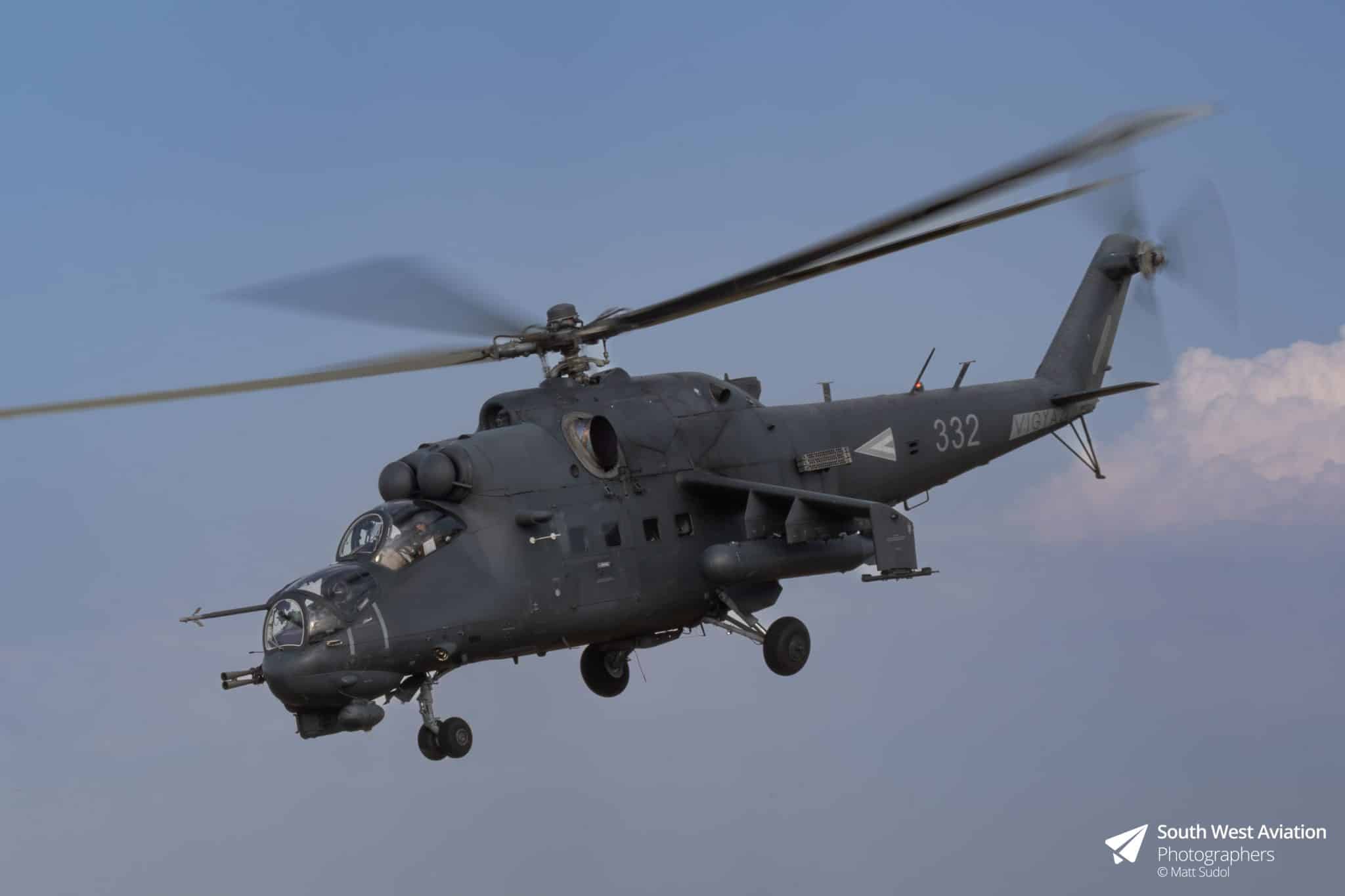
At the beginning of World War Two the Hungarian government started construction of Szolnok Airfield and by 1940 construction was completed, with the 1st Fighter Division being stationed there. The airfield was taken by advancing German forces in 1943 and saw a period of extensive development, with some of these hangars still in use today. 1944 saw the Red Army capture the base from the Germans and turn the airfield into a medical evacuation facility for Soviet troops prior to being flown home to Russia. During the rule of the Soviet Union a training school using Aero Vodochody L-29R Delfin and Mikoyan-Gurevich MiG-15bis aircraft was established at Szolnok. The fall of the Berlin Wall and the collapse of the Soviet Union saw the Hungarian Air Force move the MN 89. Transport Wing into Szolnok, operating a mixed fleet of Antonov An-26s and Mil Mi-8s. Later in the 1990s the Antonov An-26s moved to Kecskemet whilst the Hungarian Air Force consolidated all its helicopter operations at Szolnok with Mil Mi-8s, Mil Mi-17s and Mil Mi-24s all operating from the base. In recent years, the unit/base name has changed several times to reflect its helicopter specialism and in 2024 was named the 86th Helicopter Wing after Lieutenant Ittebei Kiss József, the most successful Hungarian Ace during World War One with nineteen aerial victories to his name. 86th Helicopter Wing is currently comprised of Phoenix Harcihelikopter Zászlóalj (Phoenix Attack Helicopter Battalion) transitioning a part of the fleet from the Mil Mi-24 to the Airbus H145M Hforce, Szállitó Helikopter Zászlóalj (Transport Helicopter Battalion) transitioning from the Mil Mi-17 to the Airbus H225M Hforce, The Special Operations Squadron transitioning from the Mil Mi-17 to the Airbus H145M and Airbus H225M TTH, and the Vegyes Kiképző Repülőszázad (Mixed Training Aviation Squadron) operating Zlin Z.143LSi, Zlin Z.242L and Eurocopter AS350 B1 Écureuil.
With many years of flying Mil Mi-8/17s and Mil Mi-24Ps the Hungarian Air Force was in a perfect position to be part of NATO’s ISAF Air Advisory Team based at Shindand, Afghanistan and later the Resolute Support Mission Air Advisory Team based at Kabul, Afghanistan. Working alongside fellow Mil Mi-17 & Mil Mi-24 operator, the Czech Air Force, Croatia, as well as the United States military, the Hungarian Air Force trained and mentored the aircrew and engineers of the Afghan Air Force. The training comprised of both classroom, simulator and hands on practical flying and engineering. Topics covered included, tactical flying skills, the use of unguided weapons and crew served weapons in the form of door mounted machine guns, walk around checks and a technical English language course. The Hungarian instructor’s deployments to Afghanistan lasted four months at a time and by the withdrawal of NATO troops from Afghanistan almost every single member of Szállító Helikopter Zászlóalj had deployed and trained countless Afghan colleagues. It is clear to see from walking through the Szállító Helikopter Zászlóalj’s building at Szolnok that they are extremely proud of their time and mission conducted in Afghanistan with deployment photos prominently displayed.

In 2018 The Hungarian Air Force placed an order for 20 Airbus H145Ms to equip. 86th Helicopter Wing, initially in the medium utility role, with the first airframe being handed over by Airbus in November 2019. By December 2020 it was announced that Airbus would provide their HForce weapon management system to upgrade all 20 machines to a multi-Mission medium role platform. HForce is a modular weapons system allowing ground crews to easily add and remove pods capable of carrying 20mm Cannon, 68 rockets, 70mm rockets, laser-guided rockets, utilizing a monocular helmet-mounted sight and display which bridges the gap between the aircrew’s eyes and the weapons system. Also capable of troop transport, VIP transport, Airborne Forward Air Control utilizing the aircraft’s L3Harris Wescam MX-15 camera to select targets and then pass them onto the Kecskemet based SAAB JAS-39C Gripen to prosecute the target, Search and Rescue, Special Forces support, battlefield reconnaissance as well as the ability to act as a command-and-control platform.


As well as the need to replace the Mil Mi-24P the National Defense and Military Development Program review also identified a need for Szállitó Helikopter Zászlóalj’s fleet of Mil Mi-17s to be replaced. Ordered along with the 20 H145Ms in 2018, 16 Airbus H225Ms were also ordered with the provision of the HForce weapon management system, with which they conducted the first live firing from a H225M earlier this year at the Bakony range. The H225M can carry up to twenty-eight troops, with a 11,000kg Maximum Take Off Weight by day or night in all weathers. The H225M is employed by 86th Helicopter Wing in the troop transport, cargo transportation both as internal loads and external slung loads, Combat Search and Rescue, Special Forces Support and Aerial Firefighting.


The Vegyes Kiképző Repülőszázad is also based at Szolnok Air Base and is tasked with carrying out all ab-initio training for both Airbus H145M and H225M pilots, first starting off with 50 hours of fixed wing flying on the Zlin Z.242L before progressing to the Eurocopter AS350 B1 Écureuil for rotary wing training. The Vegyes Kiképző Repülőszázad have two Eurocopter AS350 B1 Écureuils on strength, both airframes were previously operated as part of the Hungarian Air Ambulance Service which was eventually taken over by Eurocopter EC-135s. Type training is at present carried out at Szolnok on the aircrafts themselves whereas initial conversion training for current Mil Mi-17 and Mil Mi-24 Pilots took place in Donauwörth, Germany for H145M and Marseille, France for H225M crews with training being broken down into two, three-week modules covering ground school, simulator work and finally two weeks flying for unit Test Pilots an additional week and half of tuition was required, likewise Qualified Flying Instructors had an additional two-week module to complete before returning to Hungary to train the next generation of Hungarian Air Force helicopter pilots.

Whilst synthetic flight training is still in its infancy for the H145M and H225M fleets of the 86th Helicopter Wing, the use of synthetic training for tactics training and mission rehearsal is in full flow thanks to a state-of-the-art suite procured from French Defence giant Thales S.A. The suite comprises a briefing room where instructors or mission leads can brief their crews on their intent, whilst then being able to watch the rehearsal in real time via a series of LCD screens and projectors, and then post flight being able to debrief the crews. The simulator room itself has two generic cockpits and four door gunner positions, giving the ability for crews to train as a tactical pair. The Simulator is type agnostic, meaning it can be utilized by a pair of H145M or H225M crews or even a mixed formation. This allows for great crew resource management practice, especially for the crews of Phoenix Harcihelikopter Zászlóalj who up until operating the H145M never had any rear crew in the form of door gunners/flight engineers. In between the two consoles is the Joint Tactical Air Controller station, allowing the locally based JTACs to train alongside the aircrew they would be working with in a theatre of operations.

As part of their national tasking to support disaster relief operations, the Airbus H225Ms are equipped, and their crews regularly train for, aerial firefighting utilizing the Canadian designed Bambi bucket from SEI Industries, a proven design worldwide which very quickly can allow a transport/utility helicopter capable of carrying an underslung load to be transformed into an aerial firefighting helicopter. The bucket itself is slung from underneath the airframe and can pick up water from any number of water sources, flown to the target area, then using a mechanical release cable from within the cabin of the H225 open the bottom of the Bambi bucket to allow the water to be dispersed onto the target. 86th Helicopter Wing are extremely lucky as bordering the base is the Holt-Tisza River and they have special permission to exercise on a specific surveyed section of the river. In August 2024, an Airbus H225M was deployed to North Macedonia by the Hungarian Air Force to support their NATO partner with a large-scale wildfire.


86th Helicopter Wing also provide Search and Rescue (SAR) cover for Hungary with the H145M, previously a role conducted by the much larger Mil Mi-17. Whilst the H145M has a much smaller cabin with the ability to carry only one stretcher-borne patient at a time the advancements in avionics especially the four axis auto pilot out-weigh the ability to carry multiple casualties at once by allowing the pilot to spend more time looking out of the cockpit on the tasking and situation rather than the instruments and dials inside the cockpit. The SAR crew comprises a Pilot, a Technical Crew Member who assists with Navigation and Radio Communication, in addition to acting as the Winch Operator should the mission dictate a need for either of the two other members of the crew, that being the Para Rescue Jumper or the Doctor, to be lowered down to the casualty. SAR Shifts last for 24 hours with a response time both day and night of 30 minutes from the time of being alerted to the emergency. The Search and Rescue unit has their own dedicated hangar which houses a 145M equipped with a winch, Trakkabeam search light along with a cabin full of technical rescue and medical equipment. The country is split into two sectors by the River Danube, one H145M based a Szolnok covering the east of the country and another H145M at Pápa covering the west of the country.


In addition to the Szállitó Helikopter Zászlóalj and Phoenix Harcihelikopter Zászlóalj the 86th Helicopter Wing have a separate Special Operations Squadron which conducts flight operations with both the Airbus H145M and Airbus H225M in support of the co-located HDF Special Operations Command. As well as low level covert troop insertion the squadron specialize in such skills as Combat Search and Rescue, helocasting, abseiling and fast roping. The H145M is a perfect size to be air transported into theatre by the Kecskemet based Szallitó Repülöszázad with their Embraer KC-390s, whilst the H225s with their longer range could self-deploy or, if needed, utilize the Nehéz Légiszállító Század at Pápa who operate the Boeing C-17A Globemaster III as part of NATO’s Strategic Airlift Capability.


From January 2024 to January 2025 the 86th Helicopter Wing provided the Aviation Detachment for Operation Althea, the European Union Force in Bosnia and Herzegovina. The Detachment which saw four rotations from the Szolnok based crews, initially operating Airbus H145Ms and Mil Mi-17s and in October 2024 saw the Mil Mi-17 being replaced with an Airbus H225M. The aim of Operation Althea is to support the Armed Forces of Bosnia and Herzegovina with training to bring them up to a NATO standard as well as contributing to a safe and secure environment in Bosnia and Herzegovina. The Aviation Detachment’s main effort was to provide aviation support the EUFOR on the ground, be that strategic or tactical airlift or medical evacuation. During the year-long detachment the Hungarian Air Force were also able to assist the civilian population of Bosnia and Herzegovina, including the training of local Mountain Rescue Teams in helicopter operations, a Search and Rescue operation for two tourists lost on a mountainside in the early hours of the morning and rescue an infant during a landslide. Only two months later the Hungarian Air Force deployed again, this time to nearby Kosovo as part of the Kosovo Force, a NATO-led force with the aim of stabilizing and normalizing inter-ethnic relations in northern Kosovo. The Hungarian Air Force have deployed an Airbus H145M which is being utilized as an airborne reconnaissance platform, giving the KFOR command structure real time situational awareness of the area of operations.

It’s clear to see that the Hungarian Air Force, through the National Defense and Military Development Program is taking the future of helicopter operations very seriously by choosing Airbus with the H145 which has a tried and tested machine in the parapublic and utility markets and with the H225, which stems from the Puma family, an airframe type which has been used by air arms throughout the world. By adding the HWorks Weapons Management System it gives the Hungarian Air Force years of Airbus’s expertise with the Eurocopter EC665 Tigre. It should also be noted that it is not just the airframes which the Hungarian Air Force has invested in but also a huge complex of hangars and squadron buildings are in the process of being constructed which will house the Airbus fleet for years to come. The Soviet fleet of helicopters have served the Hungarian Air Force well but the introduction of the Airbus H145M and Airbus H225M will now see Hungary having an innovative helicopter fleet, not only for the defence of Hungary but also for NATO operations and multinational training.

South West Aviation Photographers would like to thank everyone at 86th Helicopter Wing for making this article possible, in particular Second Lieutenant Laura Péter, Captain Szabolcs Szamosvölgyi and Lieutenant Colonel Endre Daróczi.
Article by Matt Sudol
© South West Aviation Photographers 2025