
Krystof 12 is the HEMS (Helicopter Emergency Medical Service) base serving the Vysočina Region from its strategically positioned home at Jihlava, forming a vital part of Czechia’s nationwide emergency air‑rescue network. Operated by DSA a.s., the unit provides rapid‑response medical support across a largely rural and geographically varied area, where swift aerial intervention can be the difference between life and death. With its experienced flight crews, specialist paramedics, and a modern Eurocopter EC135 T1 helicopter configured for intensive‑care transport, Krystof 12 has become an indispensable pillar of regional emergency care, delivering fast, precise, and highly coordinated missions every day of the year. The unit carries out on average 600 missions annually, typically between two and six missions per day. Krystof 12 is one of ten Helicopter Emergency Medical Service bases within Czechia, six of which are operated by DSA a.s.’s distinctive yellow and blue Eurocopter EC135s. In addition to providing critical‑care intervention at the scene of incidents, Krystof 12 also undertakes hospital‑to‑hospital transfers for adult and pediatric critical‑care patients.
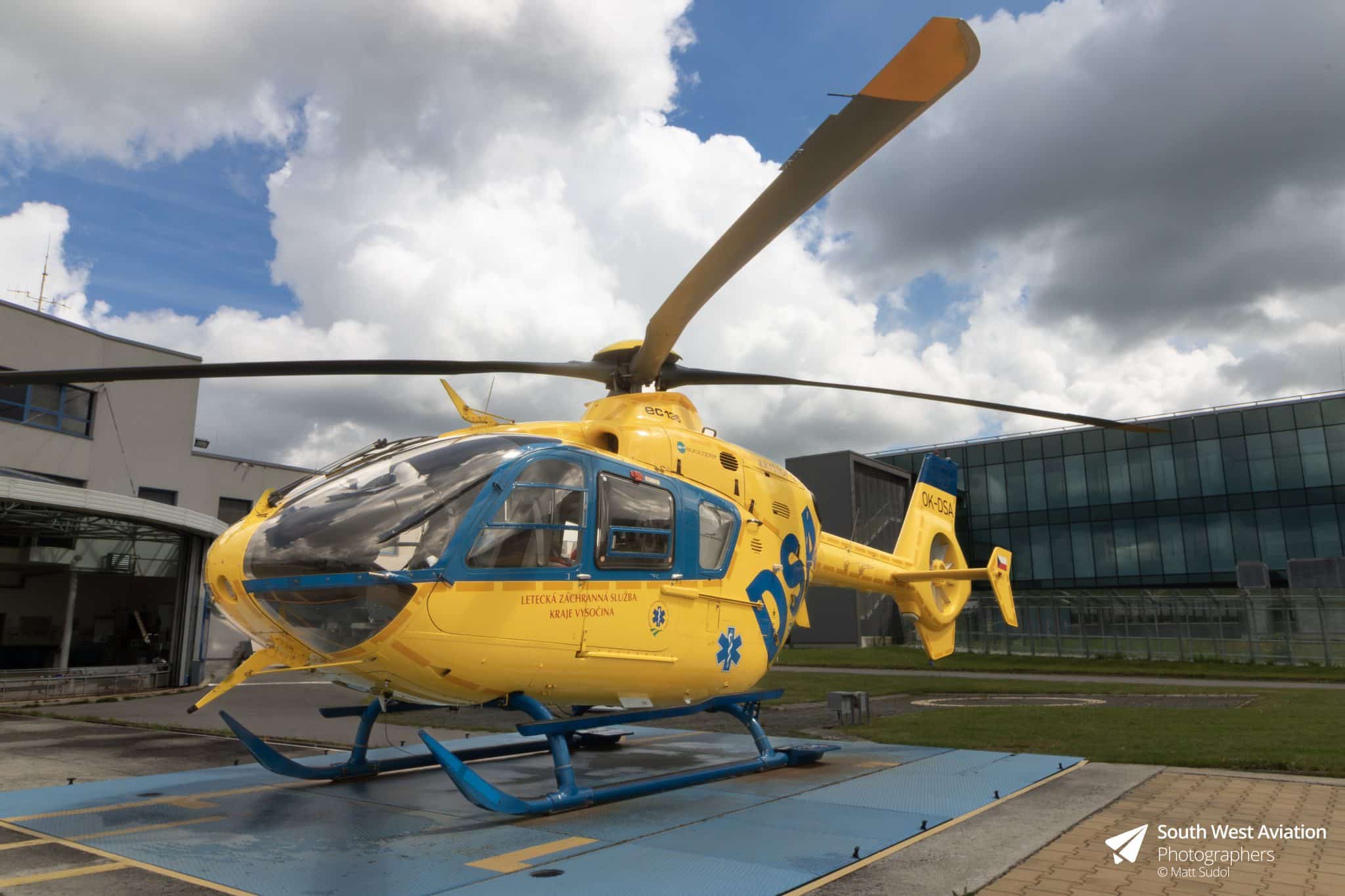
Located next to the regional hospital in Jihlava is the headquarters of the Emergency Medical Service for the Vysočina Region. However, this is far more than an ambulance station. Within its walls is the dispatch center where emergency calls from across the region and beyond are answered, and where both road ambulances and the Air Ambulance are dispatched. The building also contains administrative and rest areas for the crews, as well as a state‑of‑the‑art training facility. At the rear is a large semicircular, glass‑fronted hangar with a geometric crisscross roof structure. The hangar is home to the Eurocopter EC135 T1, its crew, and its engineers. One corner is furnished as a crew room, allowing the duty crew to relax between missions and complete administrative tasks, while the opposite corner serves as a functional workshop for the engineers. Line maintenance is carried out overnight to maximize aircraft availability, with major maintenance conducted at one of DSA a.s.’s main bases, where a replacement Eurocopter EC135 is provided during downtime.
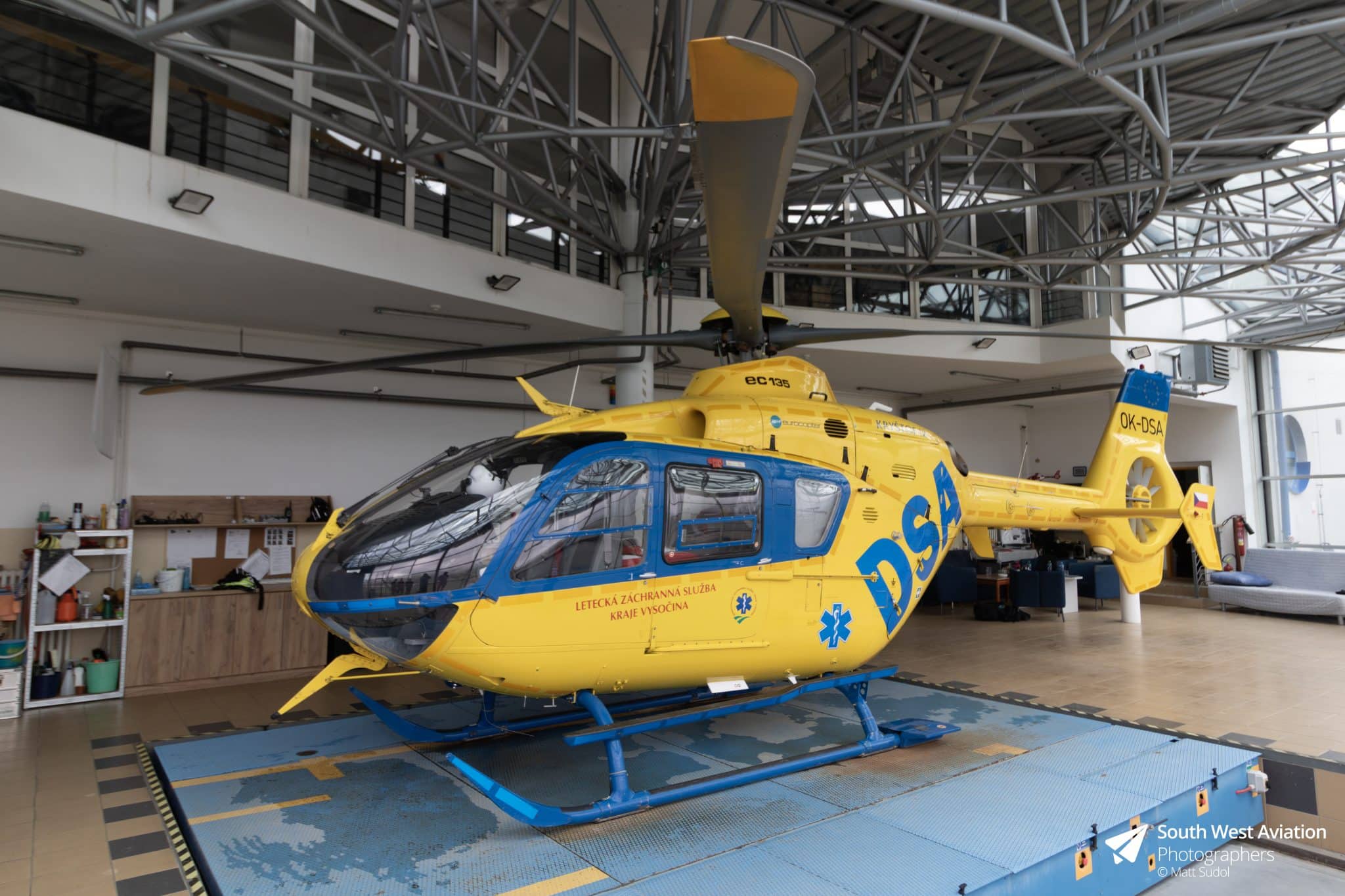
Krystof 12 operates a Eurocopter EC135 T1 provided by DSA a.s. The aircraft delivers a maximum cruise speed of around 138 kt and a rate of climb of roughly 1,650 ft/min, giving it strong performance for HEMS and utility missions. It also offers a range of approximately 340 nm on standard tanks. DSA a.s. provides the pilot and on‑base engineers, while the Emergency Medical Service supplies the Technical Crew Members (TCMs) and doctors. TCMs, in addition to being fully qualified senior paramedics, assist the pilot with navigation, radio communications, and hazard awareness particularly when landing at un‑surveyed sites. The EC135 T1 is available from sunrise to sunset under Visual Meteorological Conditions. Although operating from a private Helicopter Landing Site means the crew do not benefit from an Instrument Landing System, radar service, or other infrastructure associated with major airports, this is offset by the fact that they are the only aircraft operating from the site. As a result, they do not need to wait for other traffic or follow structured navigational routes, allowing them to lift at their discretion and fly directly to incidents in uncontrolled airspace. The Helicopter Landing Site also has its own corridor leading straight into the Resus Room of the Emergency Department, enabling rapid patient transfer. With its central location and 24/7 Jet A‑1 availability, the helipad is also used by HEMS and Search and Rescue units from across Czechia.
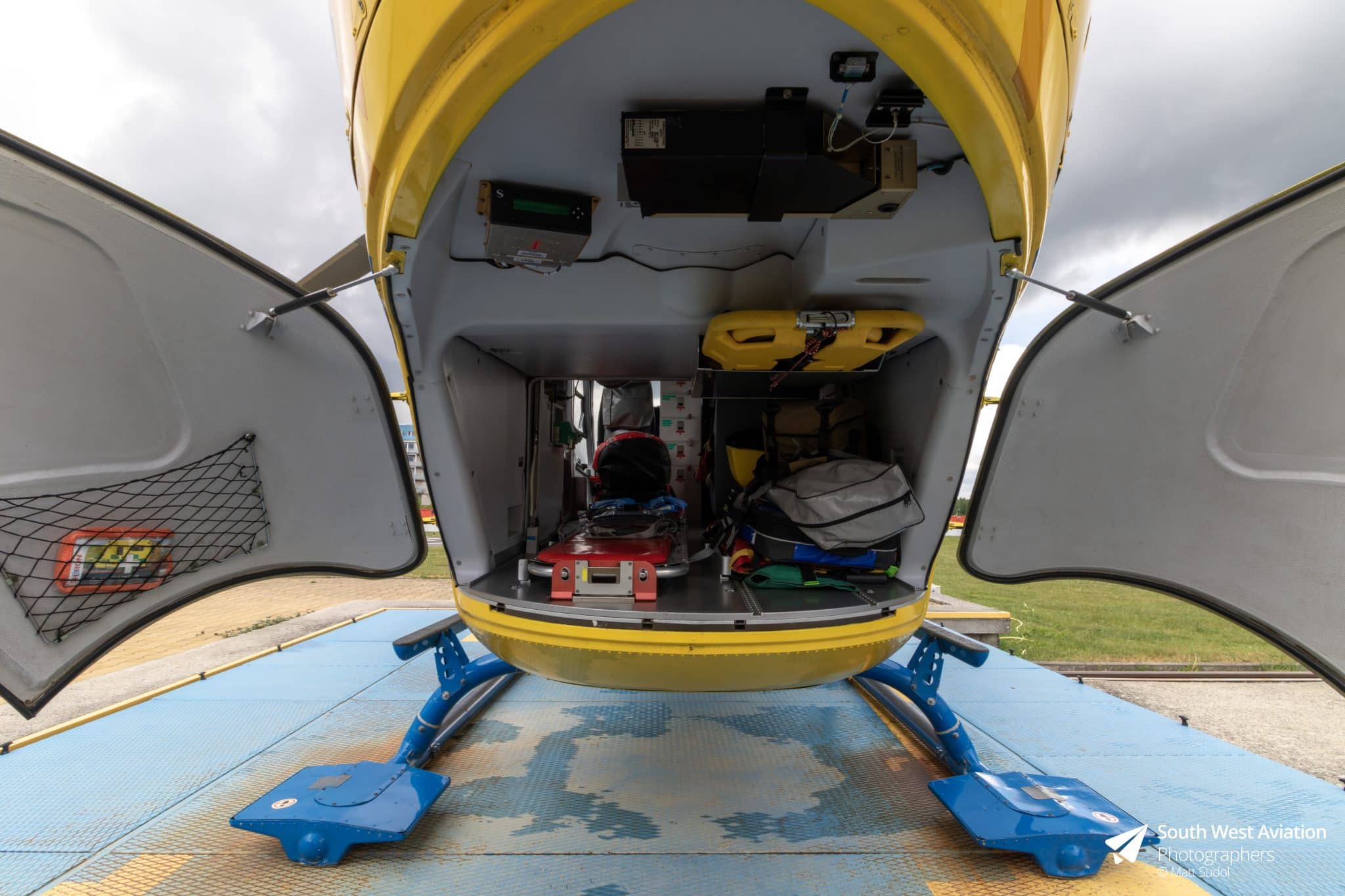
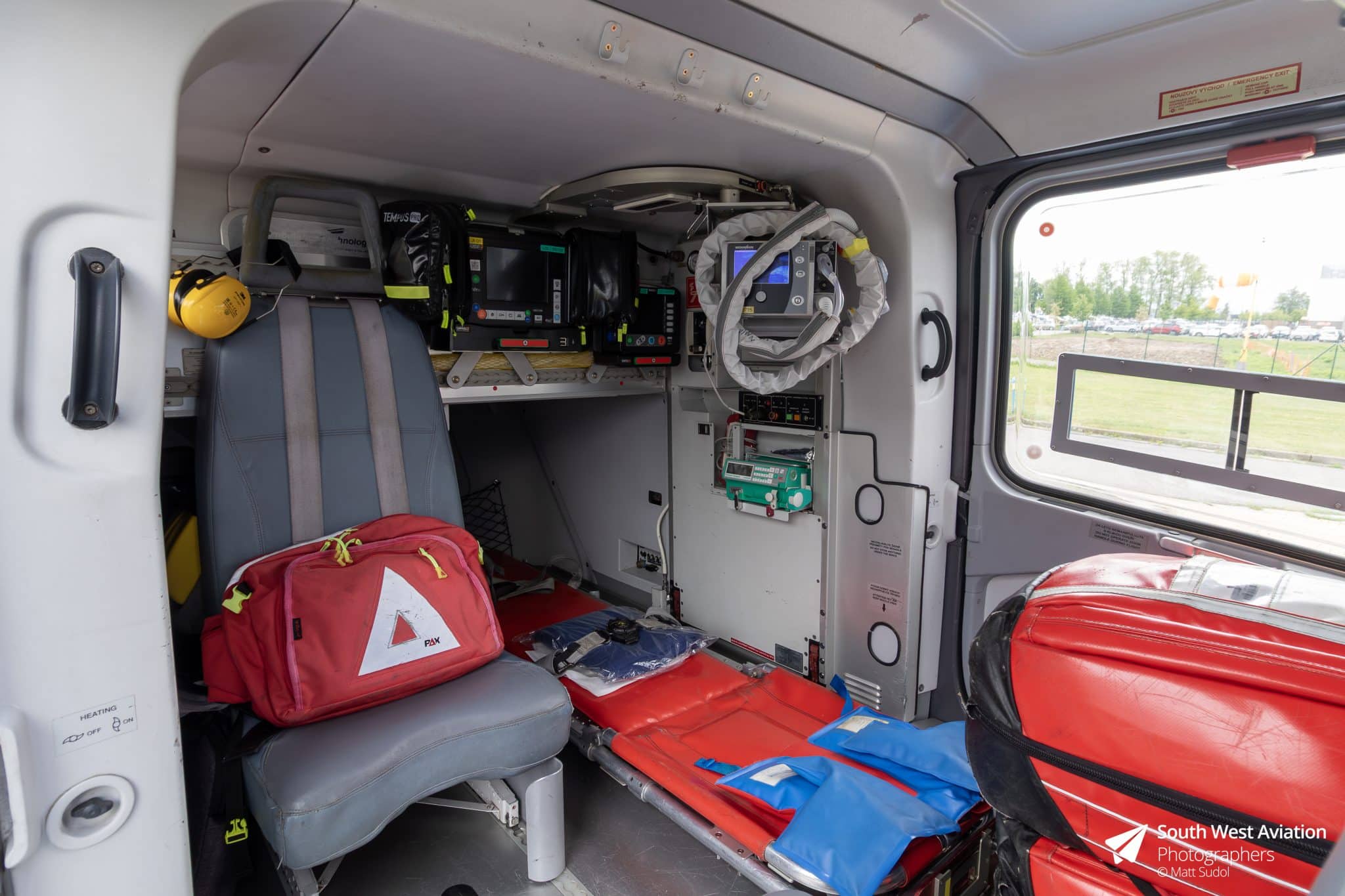
The rear cabin of the Eurocopter EC135 T1 is equipped with medical equipment typically found in the emergency department of a Major Trauma Centre, with every possible space utilized. Between the pilot’s seat and the doctor’s rearward‑facing seat is just enough room for two securely stowed oxygen canisters. The back wall houses the patient monitor, capable of providing clear, simple, real‑time ICU‑grade physiological data—heart rate, respiratory rate, non‑invasive blood pressure, oxygen saturation, and 12‑lead ECG—as well as incorporating a built‑in defibrillator should the crew need to shock the patient’s heart “should it stop beating or beating in an irregular manor.” Next to the monitor is a compact, rugged critical‑care ventilator that delivers pressure‑controlled ventilation and can take over the patient’s breathing even amid the vibration and altitude changes of helicopter flight.
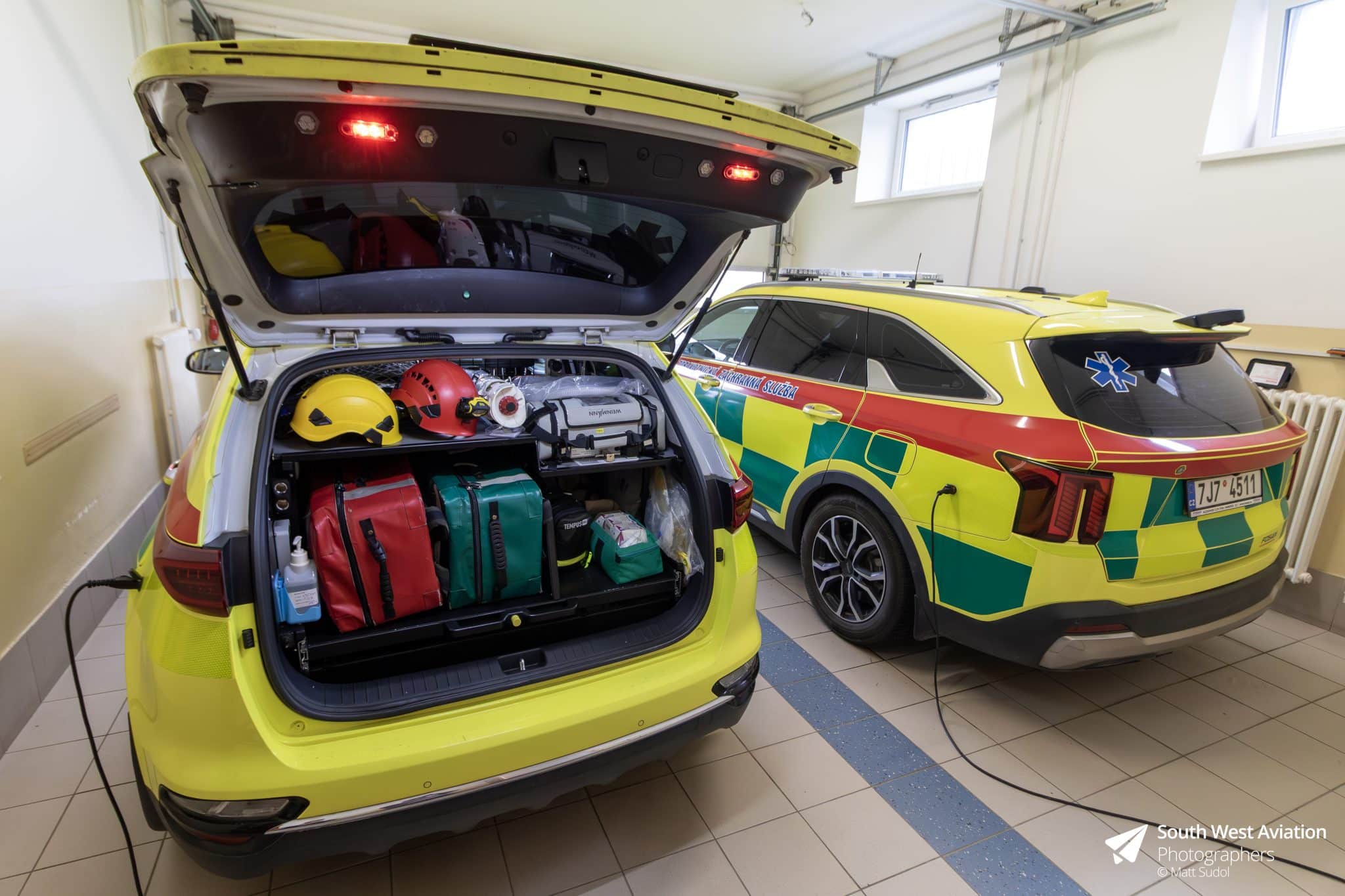
The decision to launch the Air Ambulance is made in the dispatch center located on the top floor of the base. Here, three members of staff answer emergency medical calls from the public across the 6,796 square kilometers of the Vysočina Region, with a further two staff allocating appropriate resources, including Krystof 12. Unlike Search and Rescue units in the United Kingdom, the crew of the Eurocopter EC135 T1 do not have a mandated airborne time, however, helicopter take-offs are on average within 3 minutes of the call from the EMS dispatch. In case of poor weather conditions, they have three minutes from the initial request to confirm whether they are able to attend. For night‑time missions, when weather conditions are unsuitable for Visual Meteorological Conditions or for incidents close to the Jihlava base, the crew have a Kia Sportage and Kia Sorento Škoda Enyaq iVs equipped with the same medical equipment as the EC135 T1, with the exception of the scoop and stretcher.
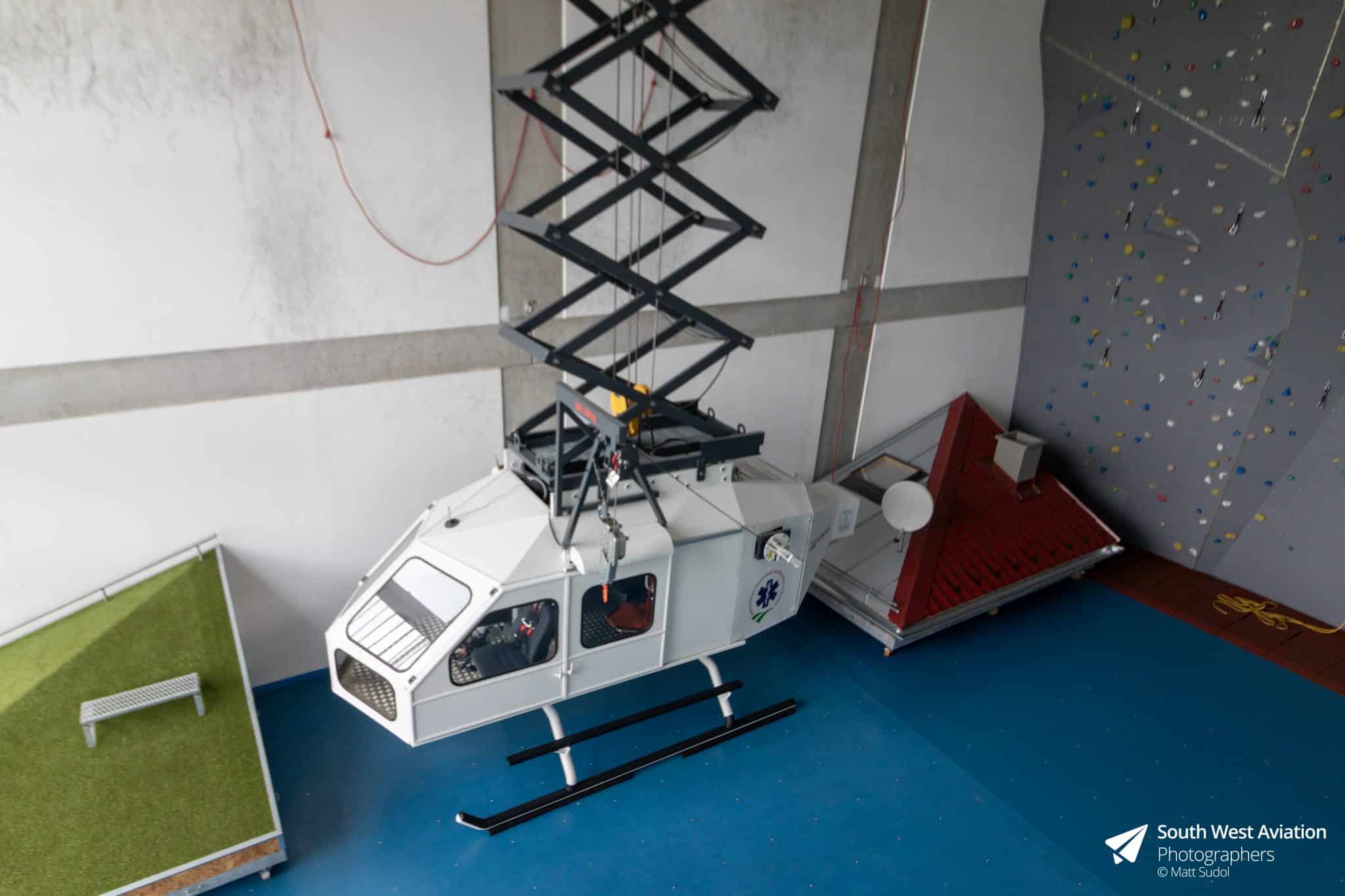
Training is a major part of the schedule for both the crew of Krystof 12 and the wider Emergency Medical Service at Jihlava. Medicine and aviation each require a vast number of competencies that must be regularly practised—from specific medical procedures to annual line checks on the Eurocopter EC135 T1. To support this, the Emergency Medical Service operates a purpose‑built training facility with multiple lecture theatres and classrooms, one of which doubles as a standby dispatch center, providing resilience should the main dispatch center experience technical issues. A simulation room equipped with state‑of‑the‑art Siemens Healthineers patient dummies allows teams to recreate a wide range of symptoms and medical scenarios. A specialized decontamination unit enables hazmat paramedics to train effectively. The main hall features both indoor and outdoor climbing walls, as well as a fully functioning helicopter cabin that allows trainee crews to practice medical procedures within the confined space of the Eurocopter EC135 T1. The mock‑up cabin can be maneuvered to simulate the aircraft in a hover and winch down onto structures such as sloping roofs, balconies, windows, and skylights. Although Krystof 12 is not required to provide winch capability, the facility is available to HEMS and Search and Rescue units from across Czechia. The hall is monitored with a series of camera allowing for accurate and thorough debriefs.
Krystof 12 stands as a clear example of how modern Helicopter Emergency Medical Services can transform regional healthcare, combining aviation precision with advanced pre‑hospital medicine to deliver critical care where it is needed most. From its purpose‑built base in Jihlava to the highly trained crews and the capability of the Eurocopter EC135 T1, every element of the operation is designed around speed, safety, and clinical excellence. As the demands on emergency medicine continue to evolve, Krystof 12 remains a vital asset for the Vysočina Region—ready to launch at a moment’s notice and provide life‑saving intervention across one of Czechia’s most diverse landscapes.
South West Aviation Photographers would like to thank everyone at DSA a.s., and zdravaotnicka zachranna sluzba kraje vysocina for making this article possible
Article by Matt Sudol
© South West Aviation Photographers 2026